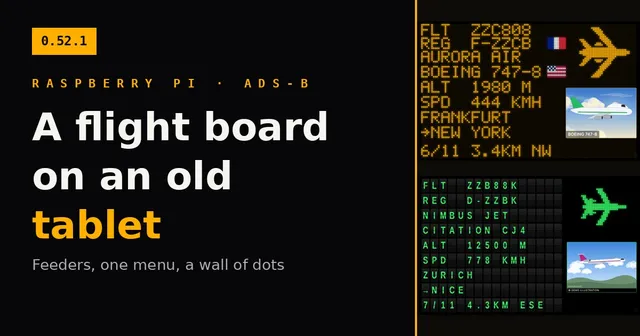
ZenithBoard shows the aircraft over my house on an old tablet, as a wall of glowing dots; the previous article introduced the whole thing. This one looks at a single feature, two small flags beside the text, because it is a good example of something I see at work every week: the requirement was right on the first day, and it still took five releases before it was right on the screen.
The rule came first
A departure board in an airport hall shows the airline’s logo. ZenithBoard does not, and never will: airline logos are trademarks, and so are aircraft makers’ marks. A logo redrawn in dots is still a copy. That line is in the instruction file the coding agent reads before every session, among the rules that are never relaxed.
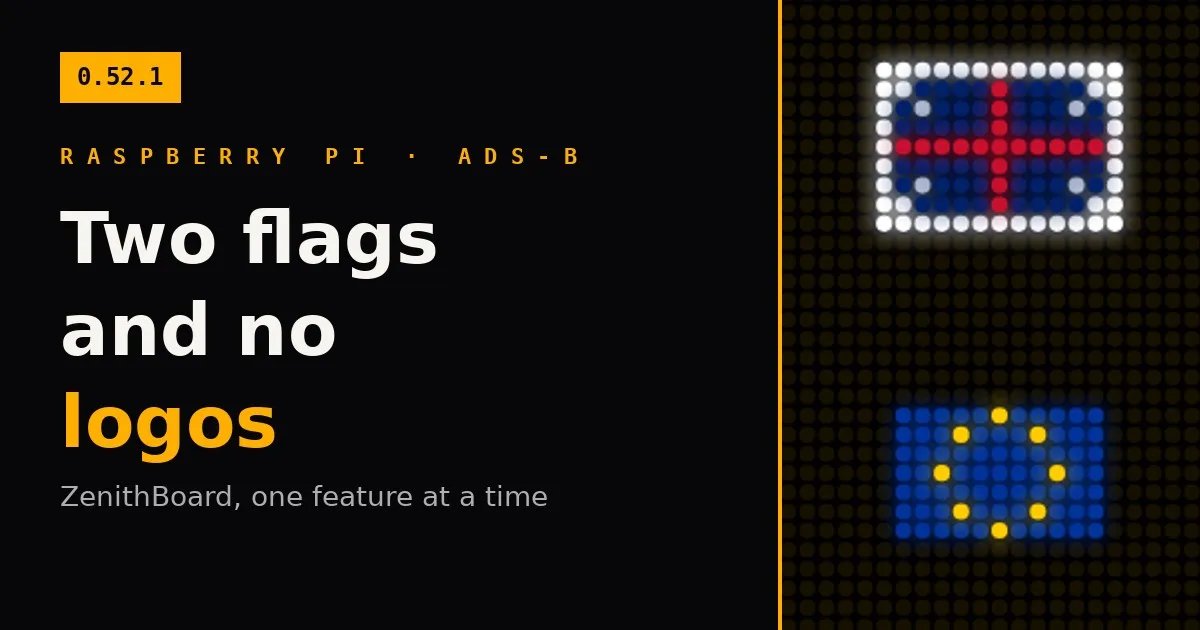
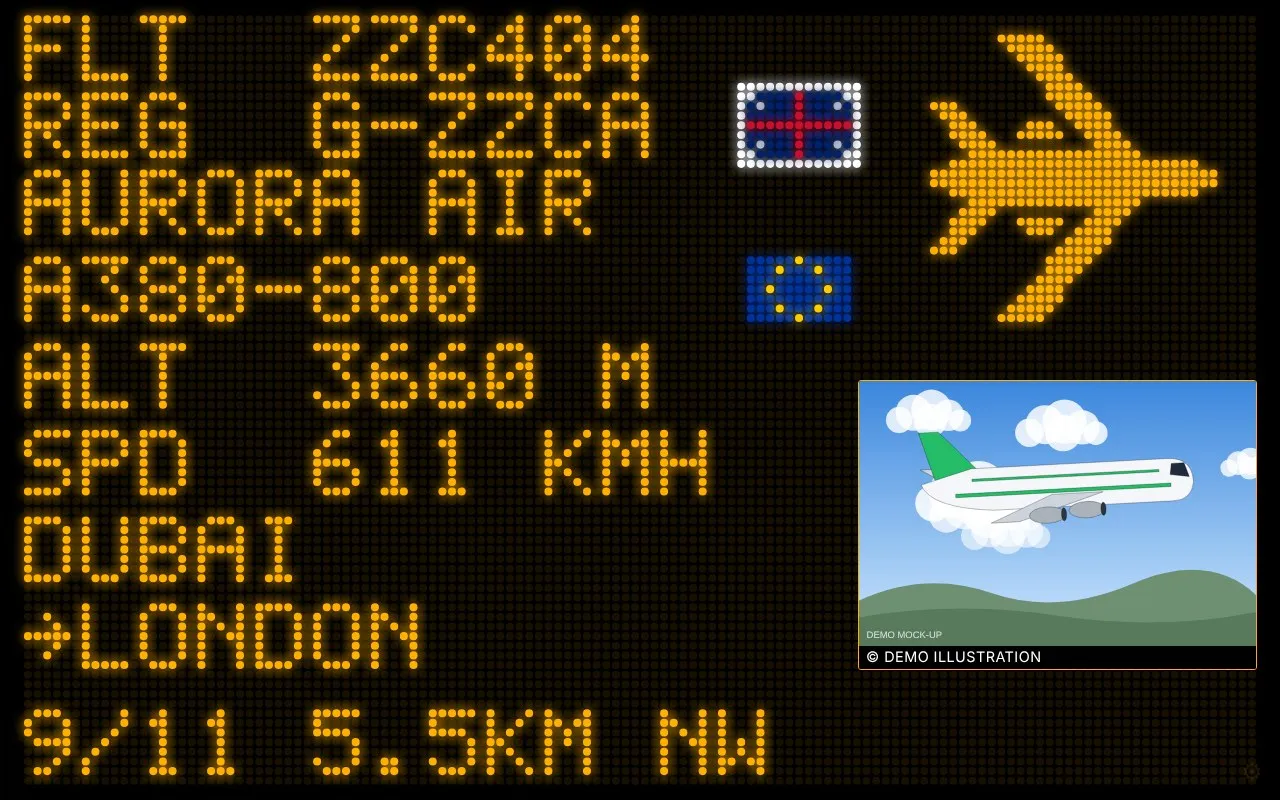
So the question became: what can the wall show instead, that carries some of the same meaning and belongs to nobody? The answer was two flags. The first, beside the registration, says where the aircraft is registered. The second, beside the model, says where it was built: an Airbus carries the European flag, a Boeing the American one. A country’s flag is not a protected mark.
The country comes from the registration the wall already has. Every registration starts with a national prefix, and the wall carries the table: OE- is Austria; CN- is Morocco, not Canada, whose prefix is C-, so the longest prefix that matches wins. Nothing is looked up on the internet, and a prefix the table does not know shows no flag rather than a wrong one. Each flag is eleven dots by seven, drawn into the same grid as the letters, so it scales with the wall on any screen.
Five releases on a real screen
The first release drew the flags, and paid for them. They take the last two characters of two rows, so the airline and the model have twelve characters instead of fourteen. A name that no longer fits now scrolls sideways, one dot at a time, and an aircraft stays on screen fourteen seconds instead of six, long enough to read a long name as it goes by. Flags can be switched off for one tablet or for the whole house.
The second release came from the first look at the real wall: Germany appeared as three bright bands. The black band was lit in the wall’s colour, while on a wall of dots black is simply a dot that is off, and the first release had chosen which flags to outline by their brightness, which was the wrong rule. The right one: black is left unlit, as it is on the flag, and a flag that carries black gets a one-dot white outline, so its edge can be seen against the dark wall. Every other flag is drawn bare.
In between, the scrolling took two releases of its own. A long name scrolled to its end, paused and jumped back to the start, which read as a stutter; it now turns continuously, the name, three spaces, then the name again, so what leaves on the left is already arriving on the right. A test takes the real drawing code and walks every step of a full turn, checking each one moves exactly one dot. Then a bright rectangle appeared around whichever row was moving: the glow of a lit dot is wider than the dot, and repainting only the row’s own rectangle piled glow up at its edges. That one was checked in a real browser, before and after.
The third came from a British Airways aircraft that seemed to have no flag at all. Two thirds of the British flag is a very dark navy, and at eleven dots on an unlit wall it read as a hole. The outline rule was widened to any flag that would otherwise be invisible. Its colours were not touched: a navy brightened into another blue is no longer that flag. The same release stopped AIRBUS A-380-800 from scrolling for nothing: the maker’s name is now dropped as soon as the full name is too long, and only what is still too long scrolls.
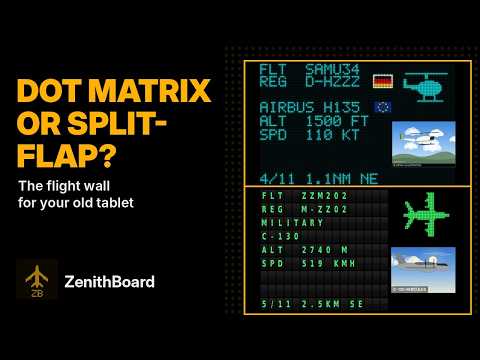 YouTube videoWatch on YouTube
The fourth moved a flag one row down. Beside the airline’s name, the registration flag read as the airline’s country, which it often is not: many Ryanair aircraft, for one, are registered in Malta. It now sits beside the REG row, where it belongs.
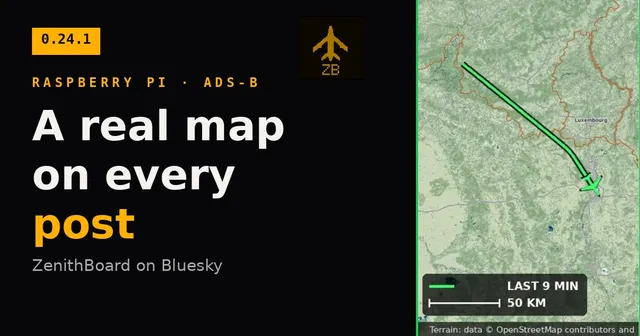
The fifth came with the posts on Bluesky, which carry a picture of the wall: the frame of the picture’s right-hand panel cut the last column off an outlined German flag. The panel moved two dots to the right.
What the five releases have in common
None of these defects could have been found by the test suite as it stood. Each one was found by looking at the real wall, or a real post, the way someone in the room would. Each fix then came with a test, so the same defect cannot come back unnoticed: the flags have their own test file, and so does the scrolling.
That is the order I trust: the requirement, then the build, then acceptance on the real device by the person who will live with it, then a test that holds what acceptance found. In service management this is ordinary user acceptance; the only unusual part is the pace at which an agent turns a remark into a release.
The rule itself never moved. From the first day to the last, the wall showed where an aircraft is registered and where it was built, without a single logo. What changed five times was how faithfully a flag of eleven dots by seven survived a black screen, a long name and a dark navy. The flags have since spread beyond the wall: the statistics page shows each airline with its flag, and the weekly summaries on Bluesky list the military aircraft by country, flag first. The Telegram messages the Pi has sent to my own chat since 30 October carry the registration flag too, after the registration, as an emoji this time: no dots to fight with.
More about ZenithBoard at zenithboard.app; the code, the flags’ table and the tests are on GitHub.
Theme: ZenithBoard. Topics: ZenithBoard, ADS-B, Raspberry Pi, Acceptance.